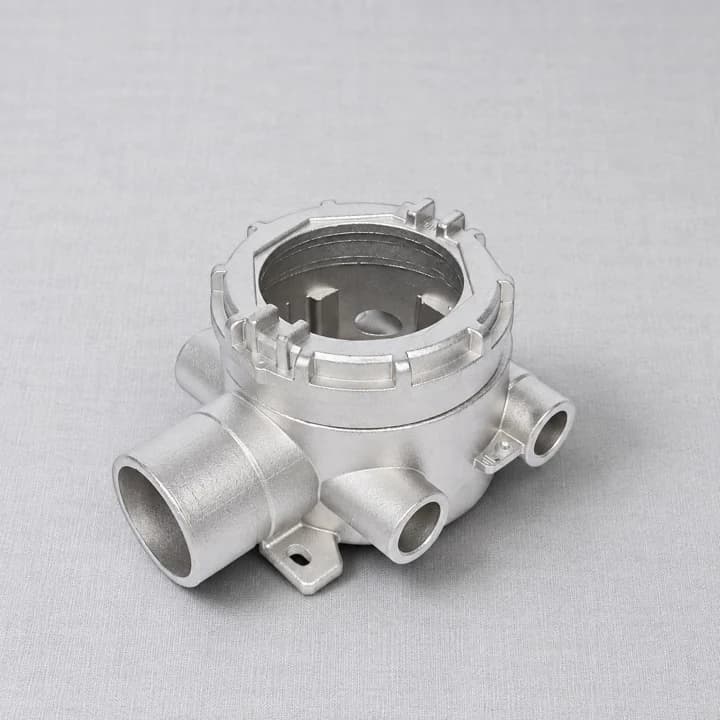
Multi-Port Housings
Circular bodies with a central opening, side ports and a surrounding mounting rim.
From open housings to mounting brackets, explore different forms for your custom part.
Circular bodies with a central opening, side ports and a surrounding mounting rim.
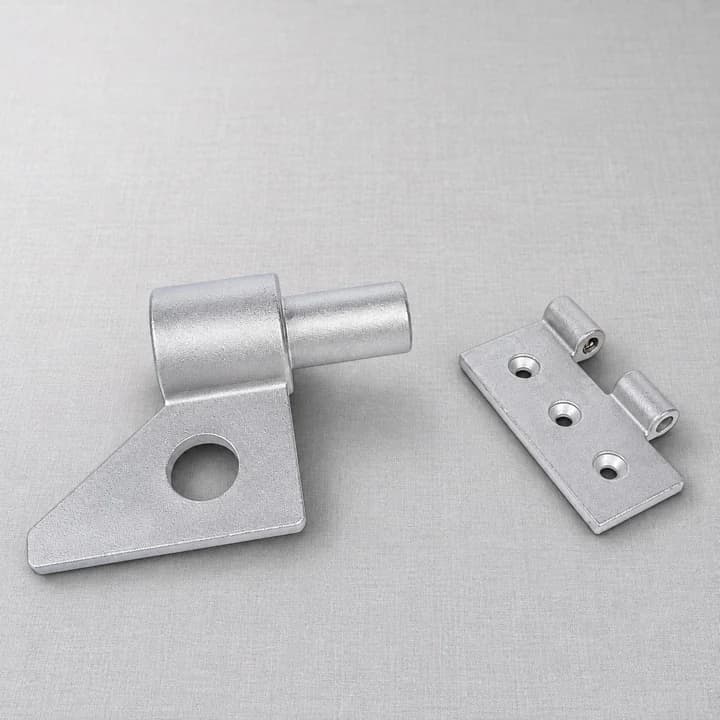
Paired hinge forms with flat mounting leaves, fixing holes and a cylindrical joint.
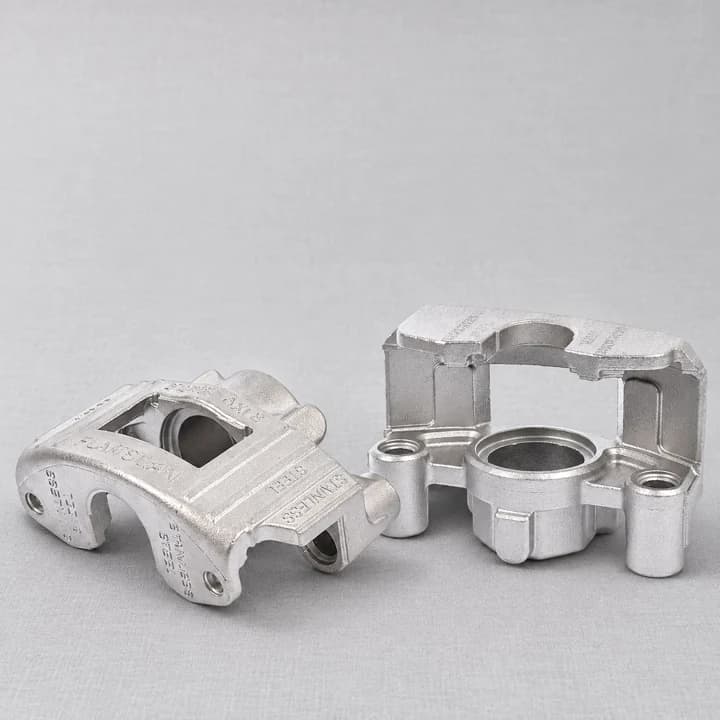
Open clamp forms with circular seats, raised lugs and connecting features.
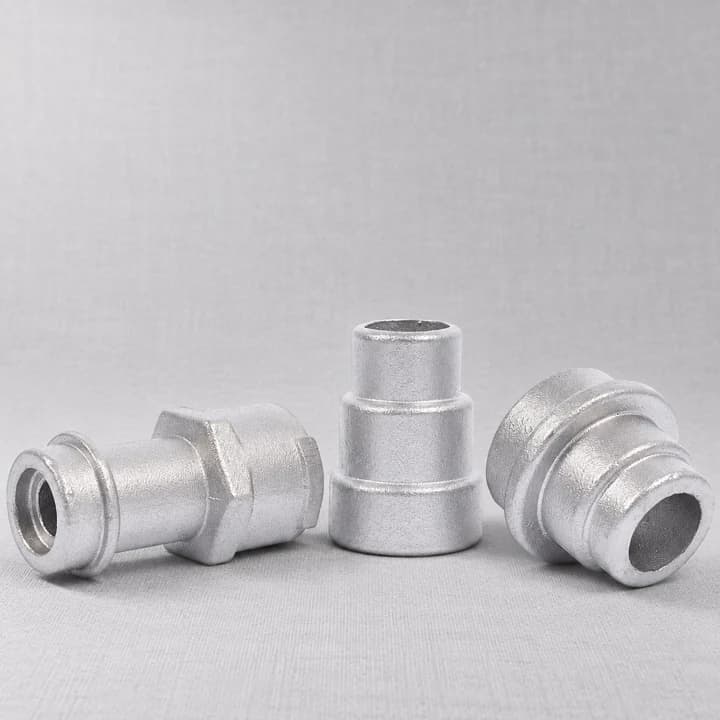
Tubular profiles combining stepped diameters, shoulders and end openings.
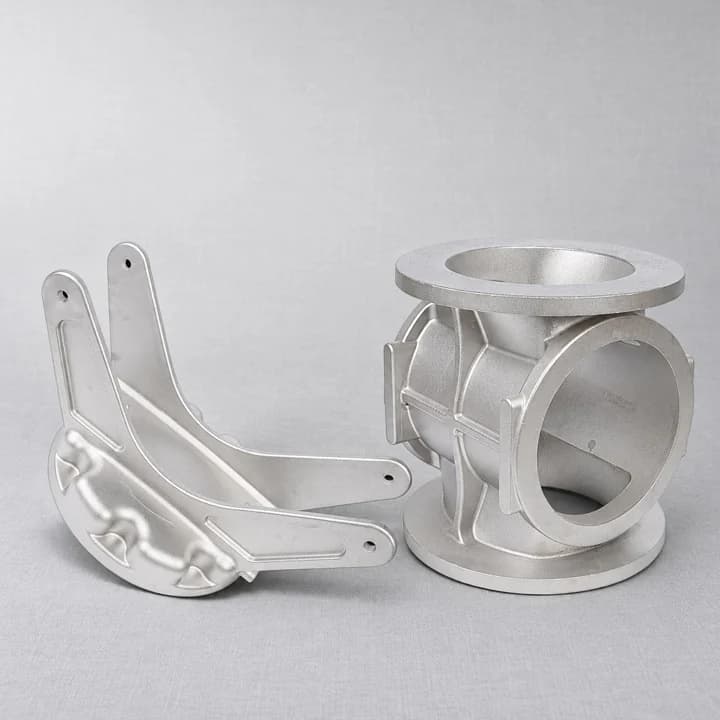
Ribbed support brackets and open cylindrical bodies with defined mounting faces.
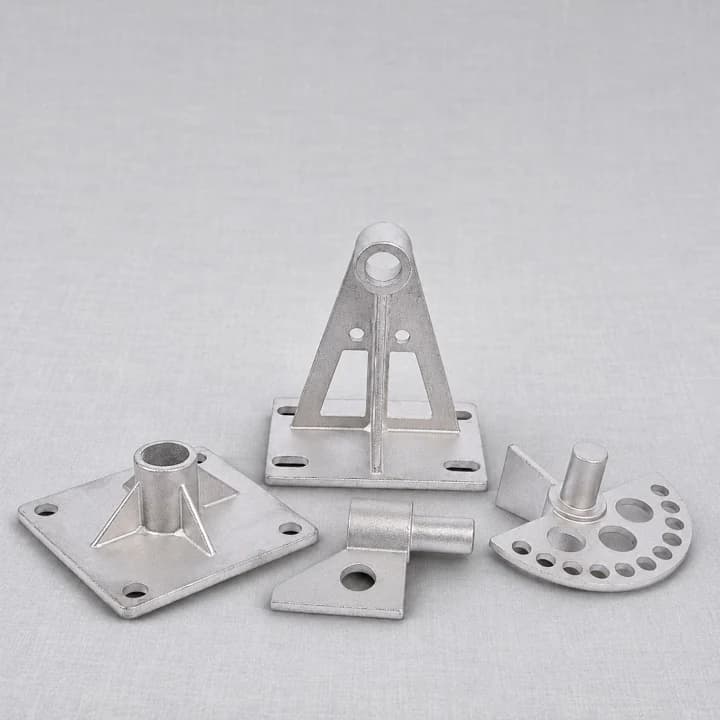
Flat bases, upright supports and circular plates with multiple fixing positions.
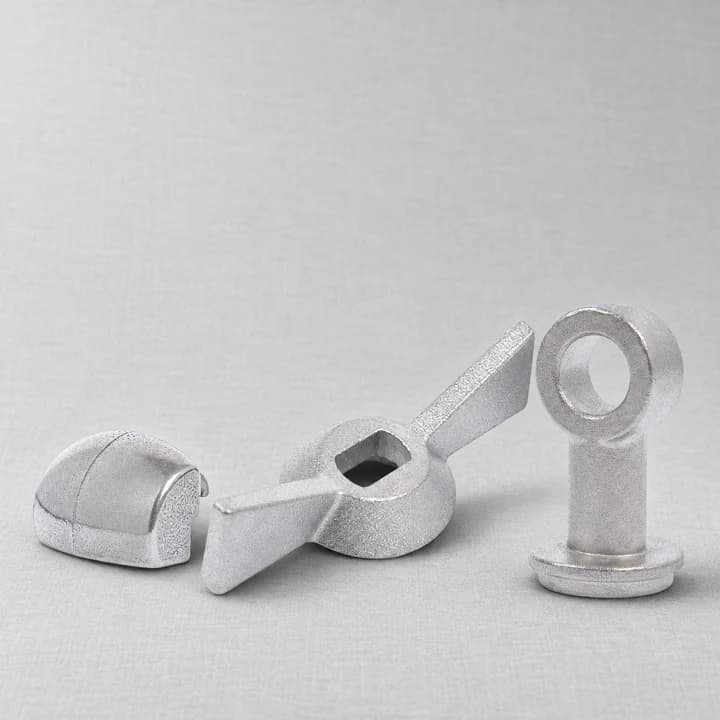
Looped and eye-shaped ends joined to stems, collars or compact supporting bodies.
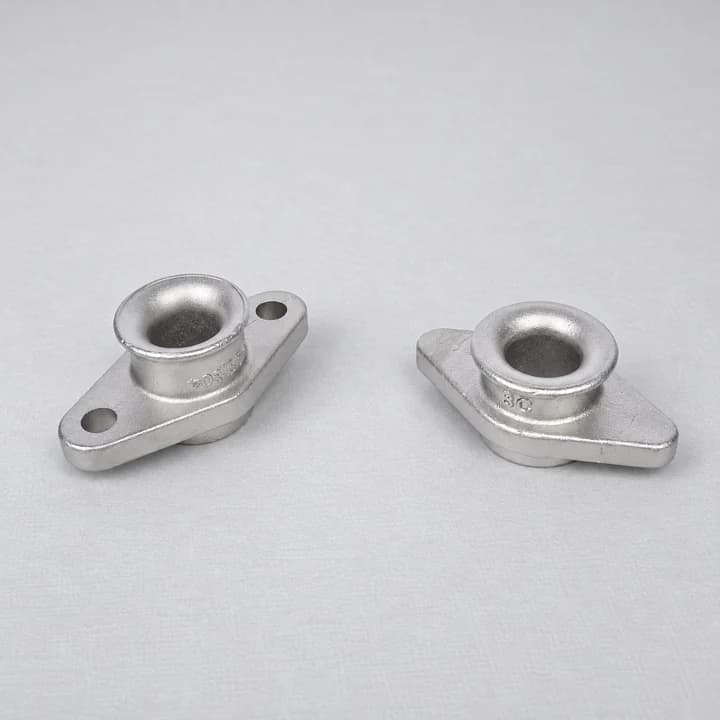
Raised circular openings on two-sided bases with a fixing hole at each end.
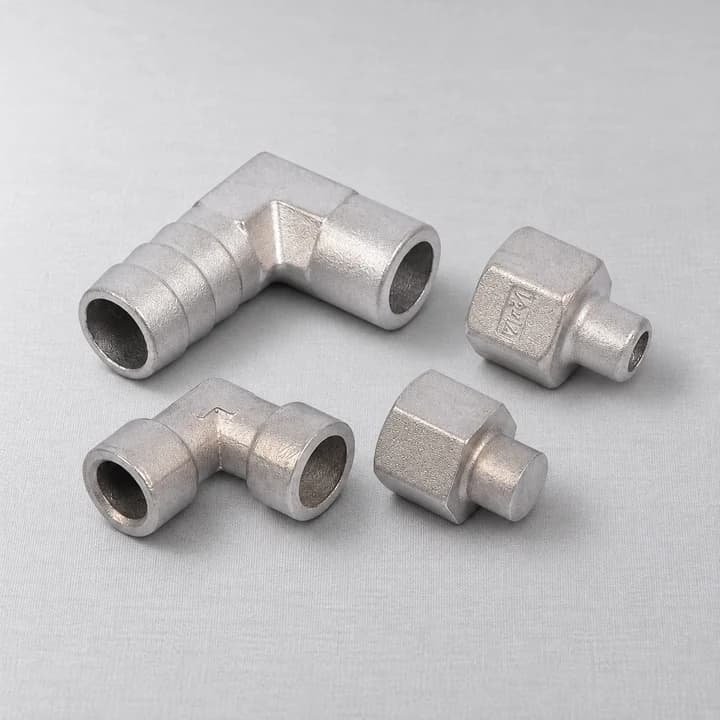
Angled and straight connector forms with open ends and stepped body profiles.
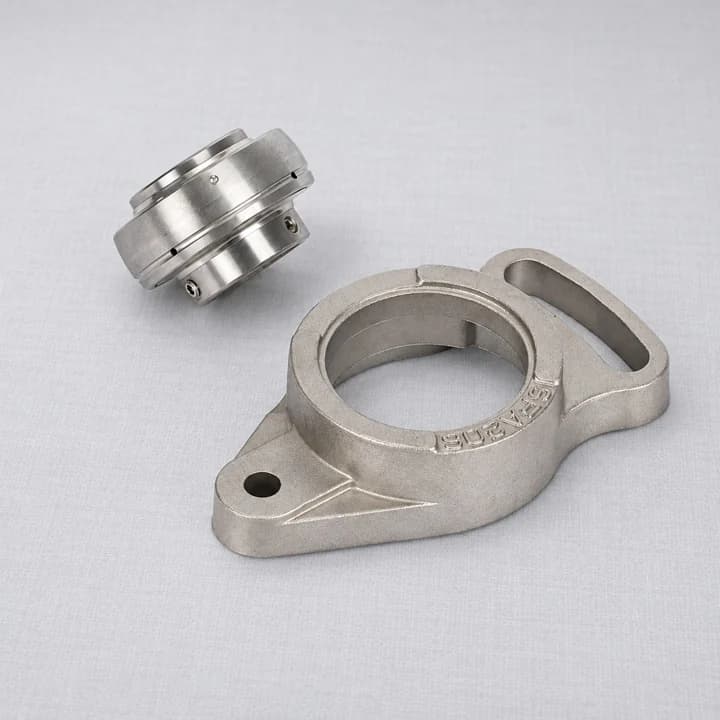
Ring-shaped bodies with broad mounting flanges and projecting fixing lugs.
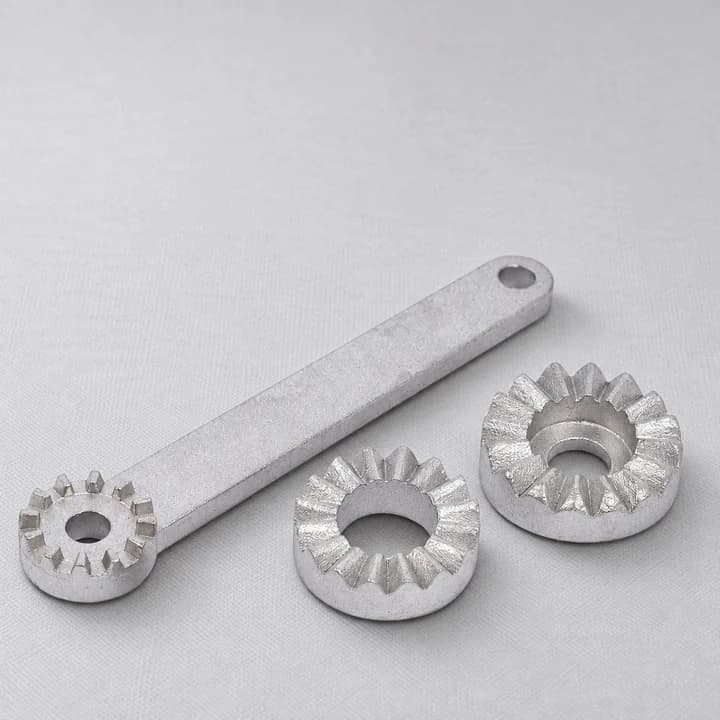
Circular serrated faces and a matching arm profile for drawing-specific assemblies.
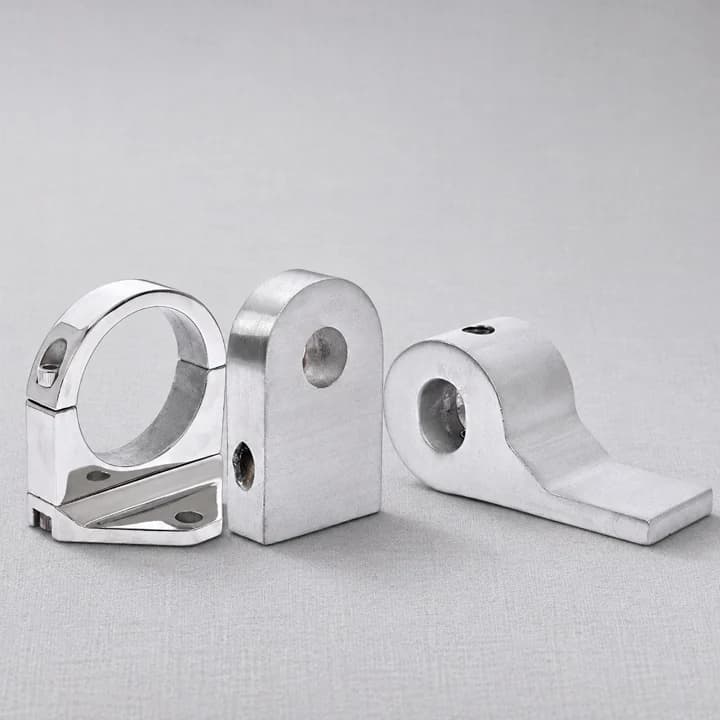
Upright lugs with circular openings and reinforced bases in several configurations.
Names describe the photographed forms. Final material, dimensions, manufacturing scope and suitability are reviewed against your drawing.
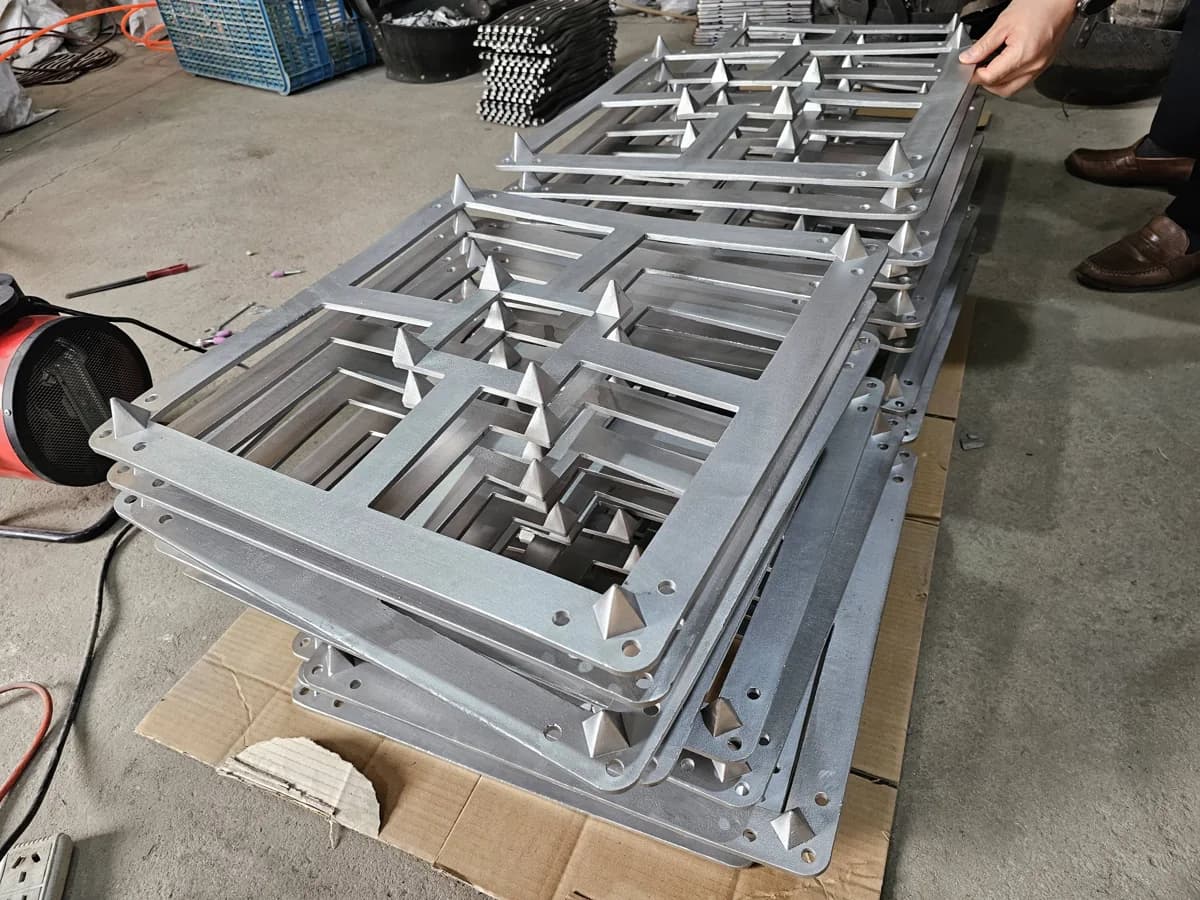
Investment casting uses a disposable wax pattern and a ceramic mold to create the metal body. It is worth evaluating for parts with ribs, bosses, curved profiles or several connected features.
For mating faces, bores and threads that need further work, CNC machining can follow casting. The drawing determines which features remain as cast and which require machining.
Explore casting & machining →A typical investment casting route, illustrated with photographs from our workshop.
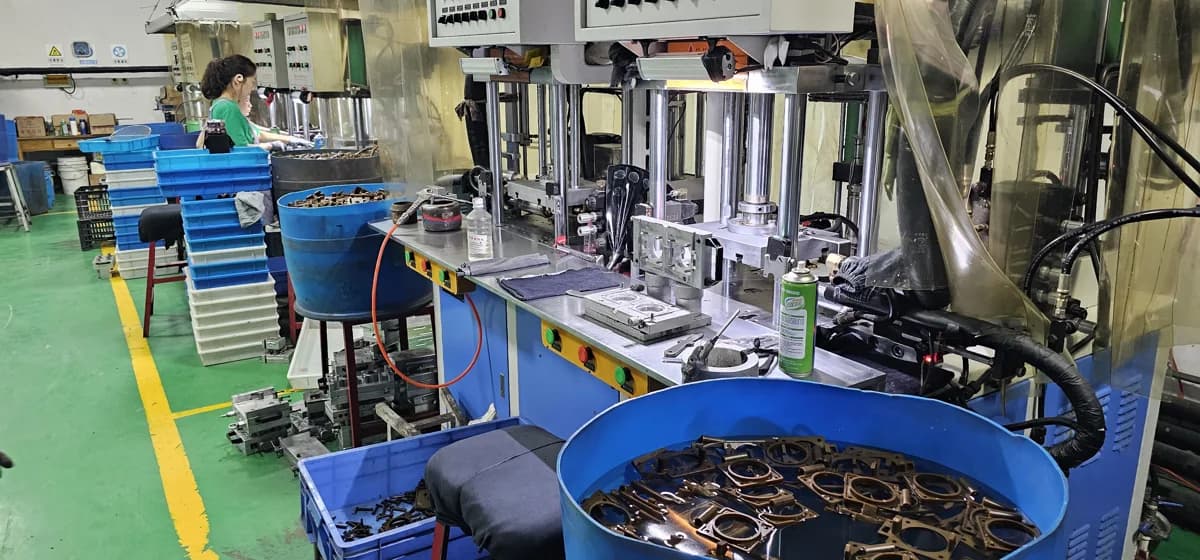
The agreed component geometry is reproduced in wax using tooling. Pattern shape and the features intended for later machining are considered before production.
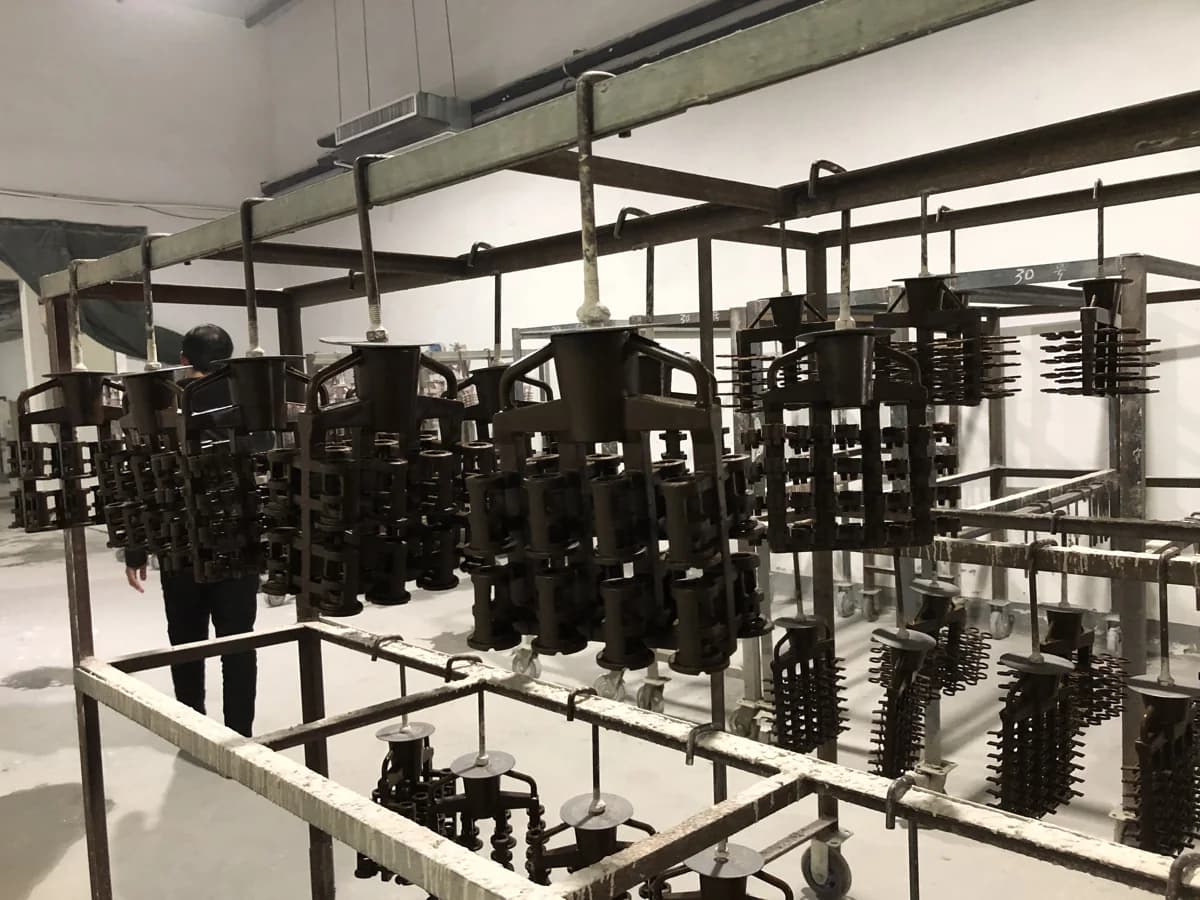
Wax patterns are attached to a runner system to form a tree. This creates the channels through which metal will reach the individual part cavities.
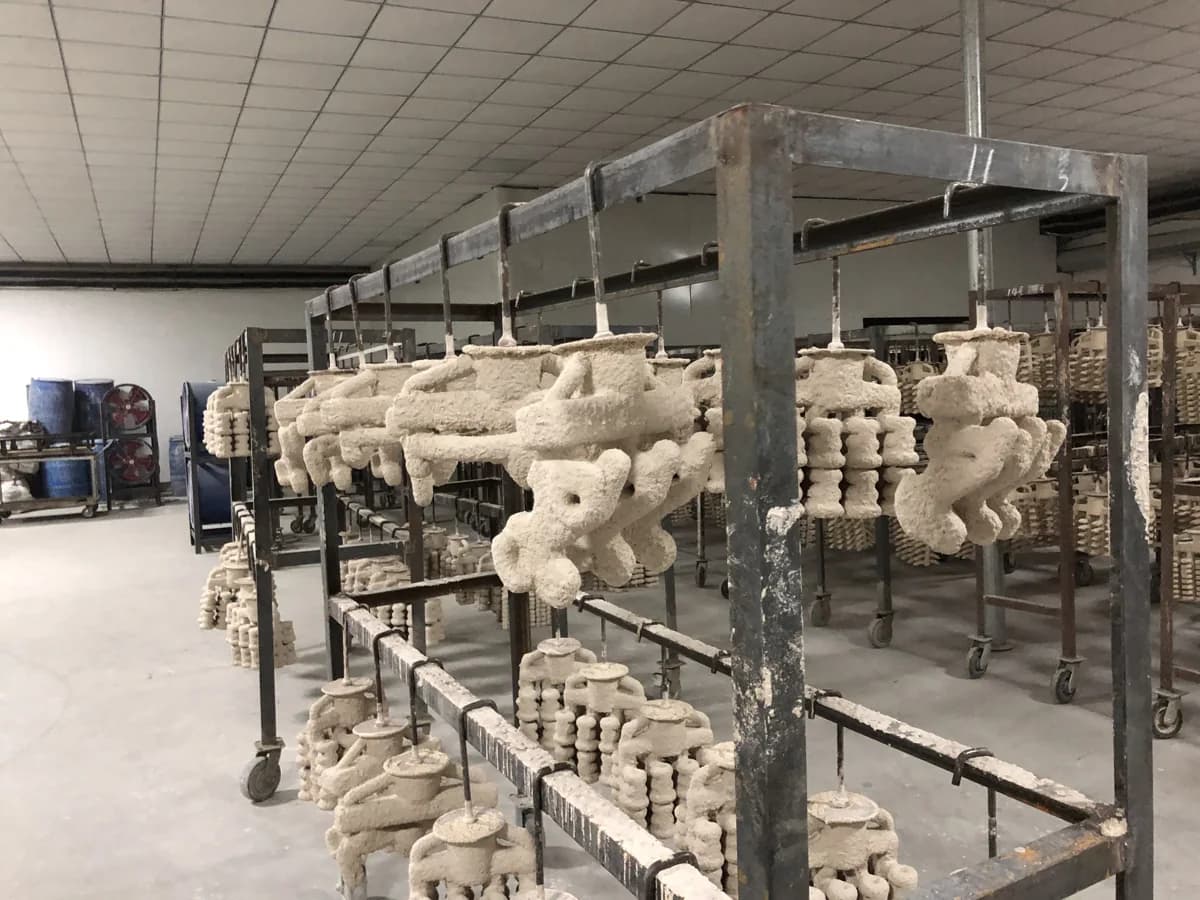
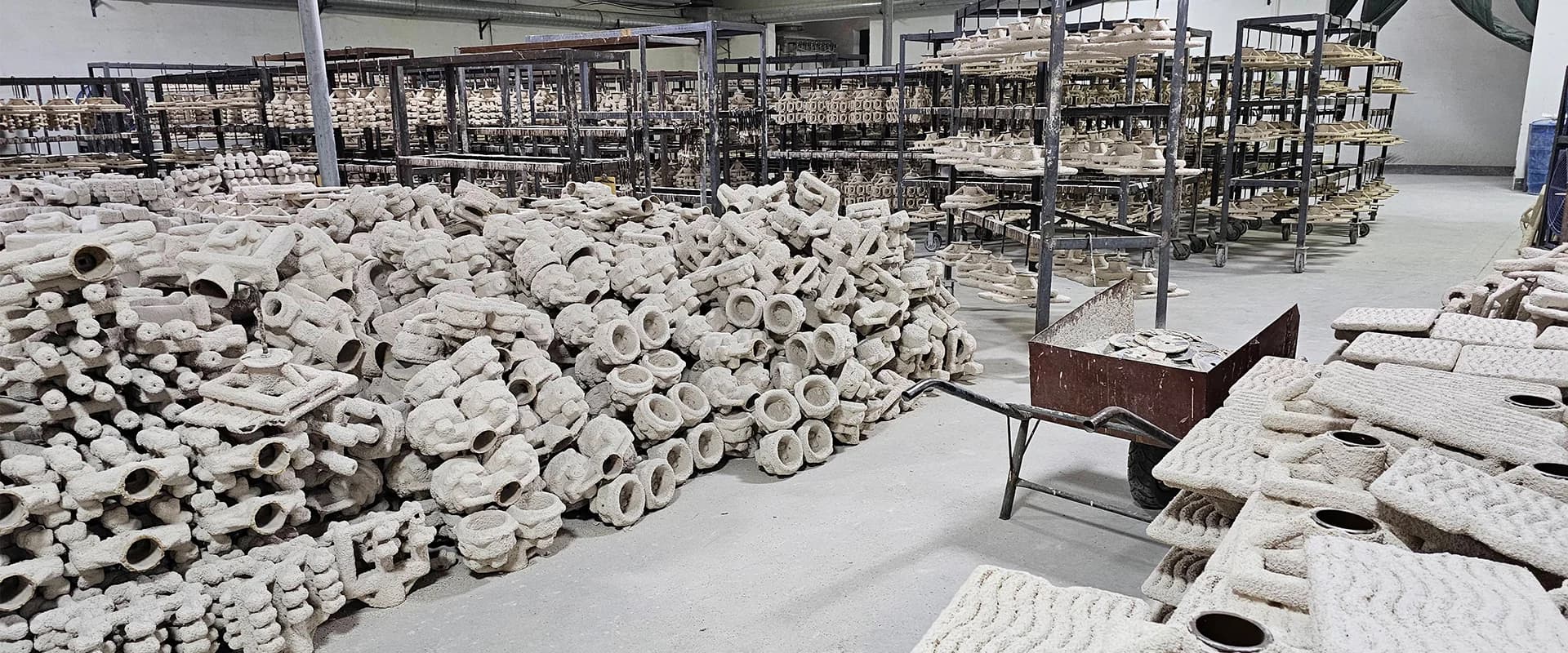
The tree is coated with ceramic slurry and refractory grains, then dried. Repeated layers form the shell that will surround the metal during casting.
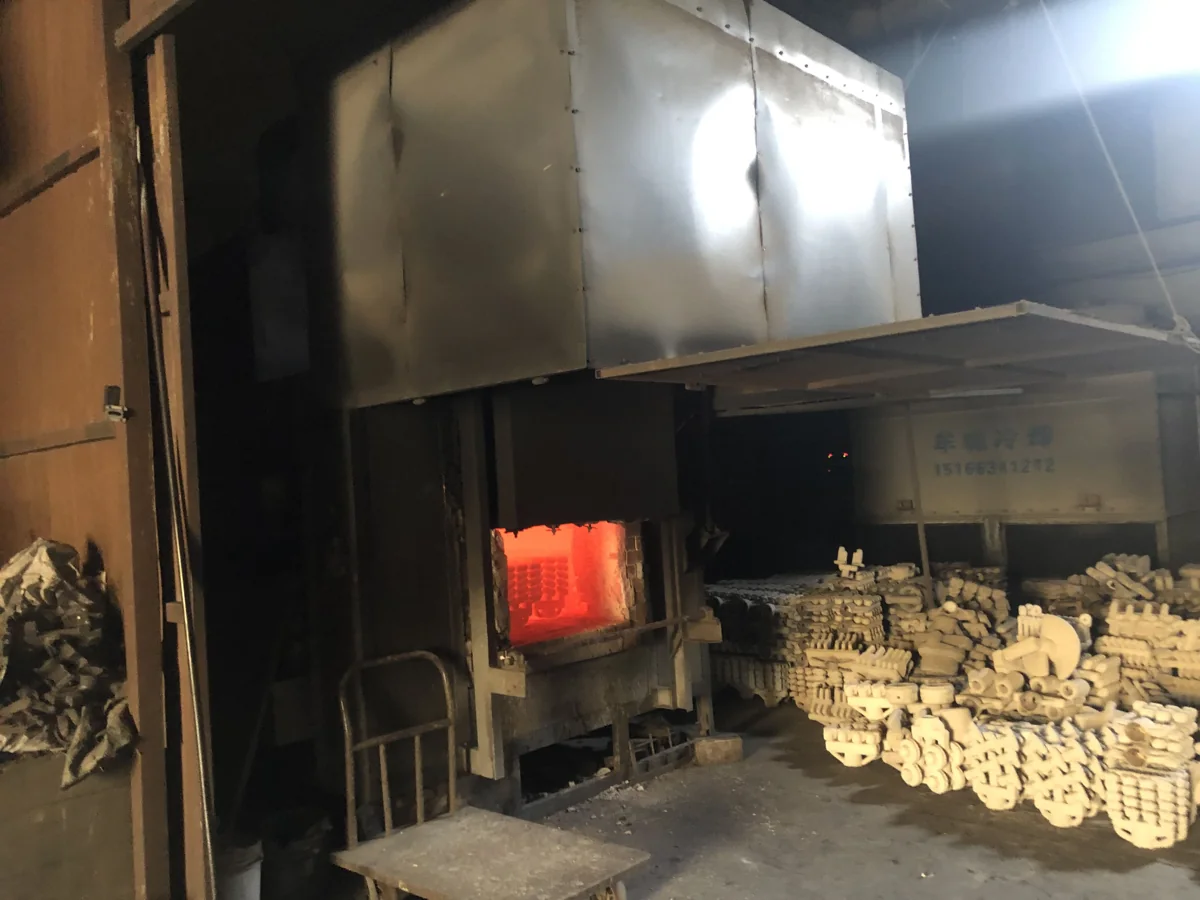
Wax is removed to leave a hollow mold. The shell is fired and prepared for molten metal, which fills the cavities and is allowed to solidify.
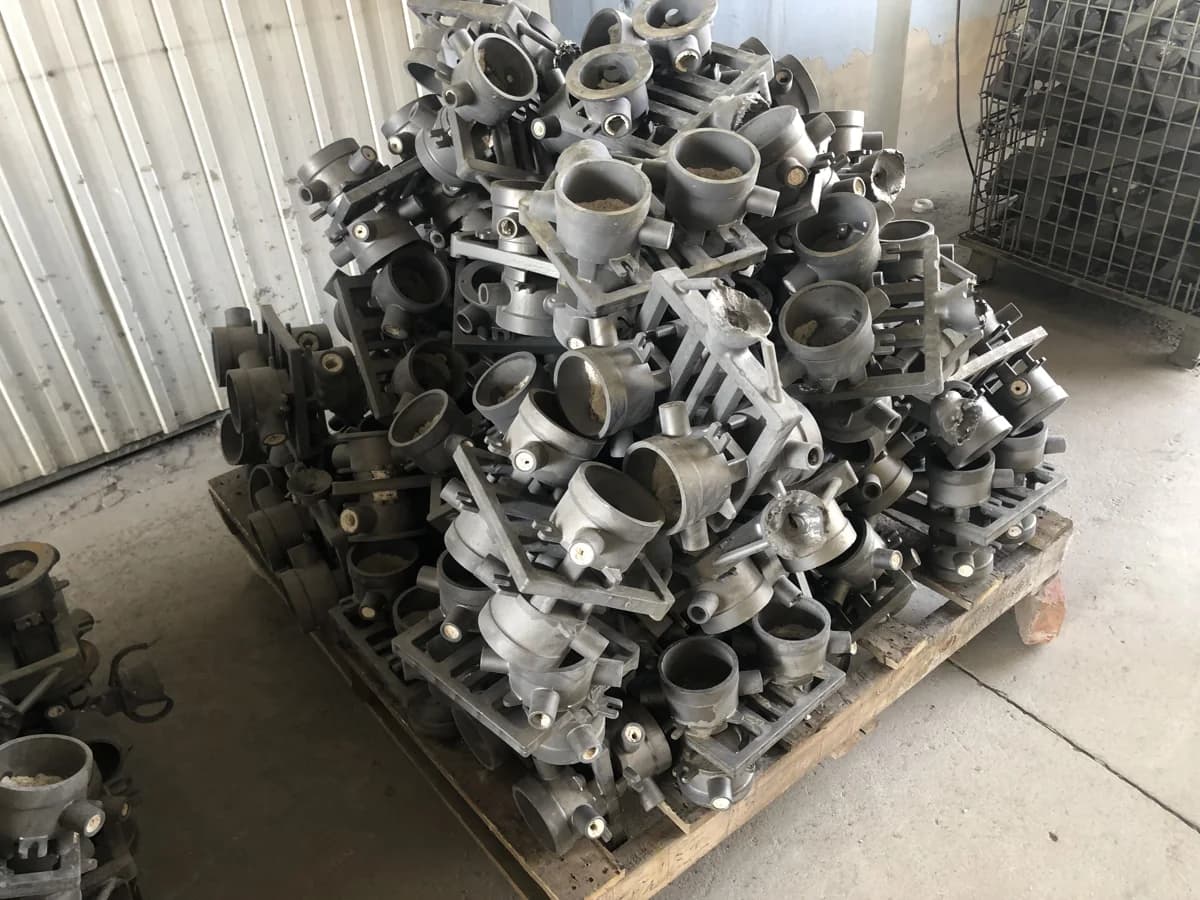
After cooling, the ceramic shell is removed. The individual castings are separated from the runner system and the remaining gate areas are finished.
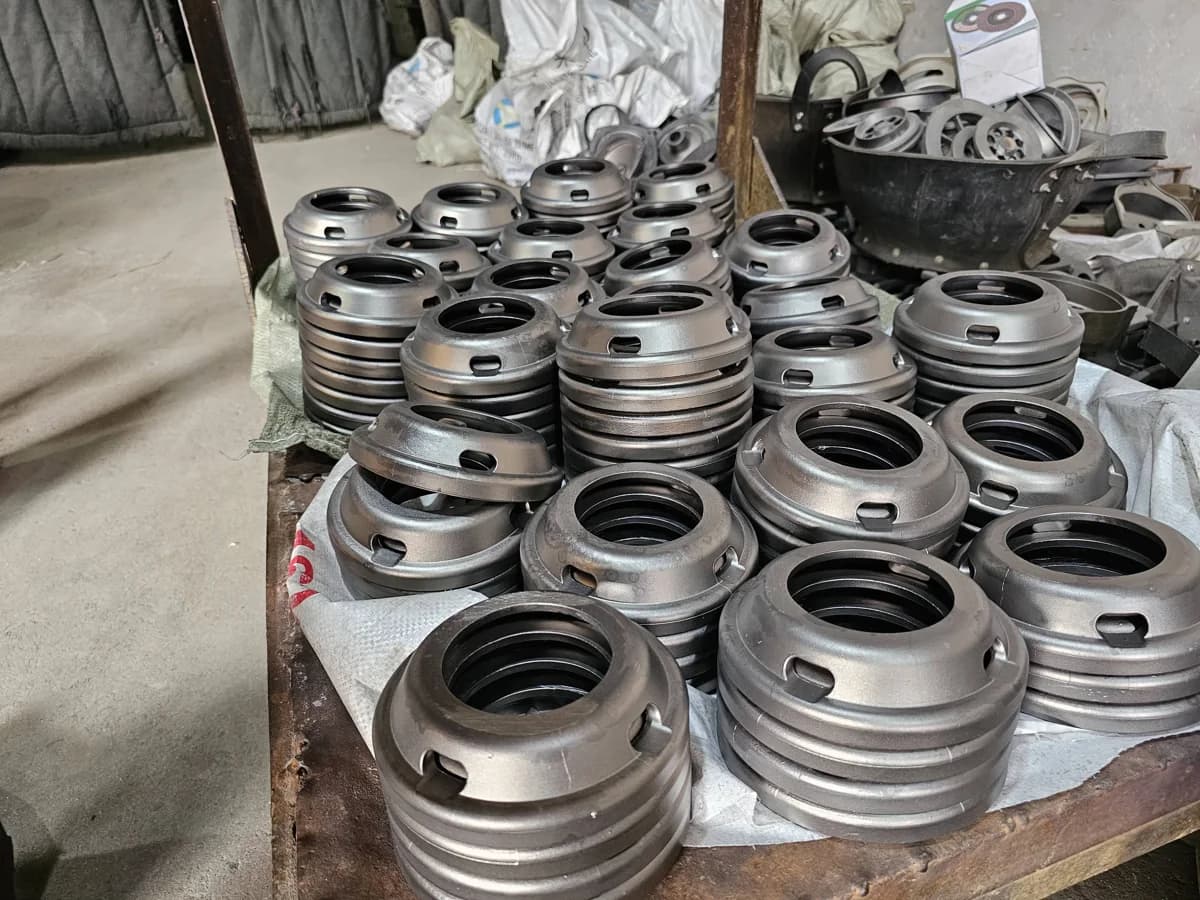
Where specified, turning, milling, drilling or tapping completes selected features. Applicable dimensions and internal threads are checked against the agreed inspection requirements.
The sequence explains the general lost-wax process. Tooling, process details, additional operations and acceptance requirements are agreed for each project.
Material, machined features and inspection should be reviewed together before an order is placed.
304, 316 and 316L are available for casting projects. The formal casting designation, standard and supporting material documentation are agreed for the order.
Review stainless steel materials →Identify datums, mating surfaces, bores and threads. Casting allowance, machining access and the required finished geometry are evaluated against the drawing.
Coordinate casting & CNC →Calipers support applicable dimensional checks; thread plug gauges support applicable internal threads. A factory quality inspection report can be provided for the agreed scope.
See our inspection approach →Share your 2D drawing or 3D model and explain the part’s function, critical features and documentation needs. Tolerances, order quantity and lead time are assessed for your project.
These are evaluated for each drawing and project. Include your critical dimensions, required quantity and target date so we can discuss feasibility and quotation terms.
Calipers are used for applicable dimensional checks, and thread plug gauges for applicable internal threads. A factory quality inspection report can be provided. Specify the dimensions and report requirements for review before ordering.
Yes. Investment casting and CNC machining are independent services. The need for subsequent machining is reviewed against your drawing.
Share your drawing and requirements. Let’s discuss the manufacturing route.